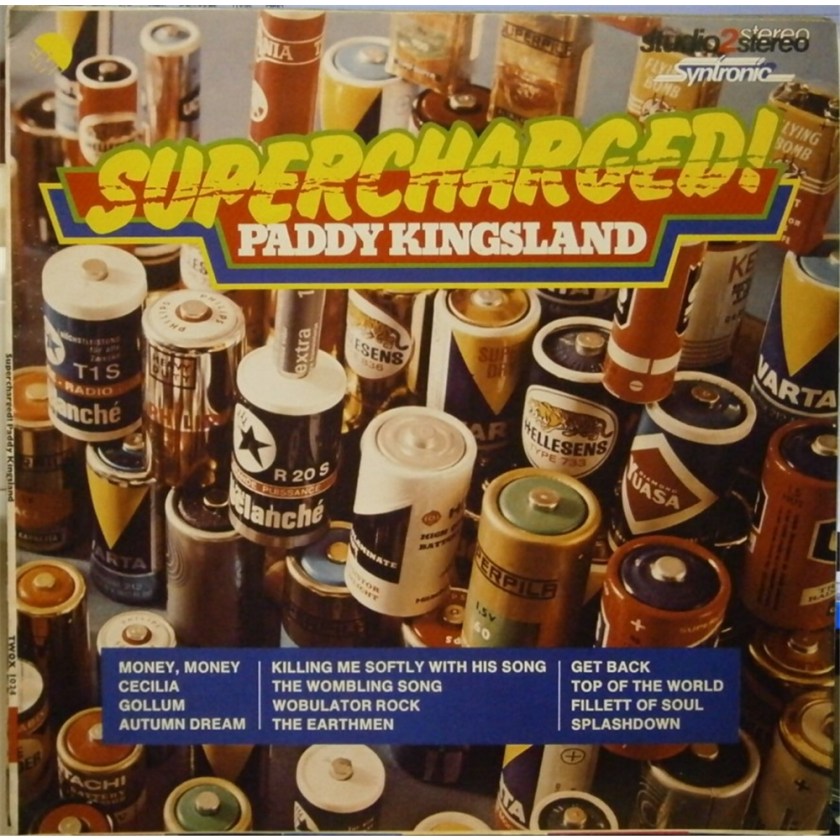
A rather hurried post today, starting with an extract from Howlround‘s final gig (for the time being) at The Electric Dog Show, Power Lunches from earlier this month. It’s a ‘greatest loops’ set of sorts, so you may hear a few of our favourites alongside some brand new material, of which we now have rather a lot. We really do need to start knocking it all together into that album we’re supposed to be getting on with:
You can read a very complimentary review of the entire event (including superb sets by Quimper and Gyratory System) by Michael Holland (who we also have to thanks for these lovely photos) on the Ears4Eyes blog, but I’ve taken the liberty of quoting the paragraph pertaining to ourselves here:
‘Howlround were amazing, perfectly eerie, a droning, revolving yawn of sound, a morass of crumbling noise, whale moans, the distress of slowly compressing hulls and skulls, they conjured a hard to place melancholy – perhaps from the knowledge that the tapes and machines are at the end of their lives, still vibrant but with numbered days. Long strands of tape spun around stands, the duo stumbled around the flickering web like spiders, the audiences’ minds caught and bound, constricted further with each passing minute. A ballet of thread-hanging twirls, or a pair of tape-architects measuring drone boundaries for fencing-in sound-ghosts…
In other news, a most flattering post regarding Howlround’s debut album The Ghosts Of Bush (as well as a few other bits and pieces from the Foggy Archive) appeared this week on the excellent A Year In The Country website. Filed under ‘Trails and Influences / Other Pathways’, it’s the latestof the blog’s extensive investigations into ‘the underlying unsettledness to the English bucolic countryside dream’, and proves as immersive and well-researched as ever. This is amply proved by the fact that they dug out this home-made press release I’d forgotten ever making: And lastly, to pile glory upon glory, ace music curators and Boomkat offshoot 14 Tracks have included ‘неизвежбан‘ from Howlround’s second album Secret Songs Of Savamala in their recent selection ‘Psychoacoustic Geography‘. It’s the second time I’ve been featured on one of their regular download compilations, each one centred around a specific theme; and this latest selection also features work by Ingram Marshall, Moondog, David Toop, Janek Schaefer and Anne Guthrie amongst many more! Very proud to be in such company, particularly as the reissue of ‘Fog Tropes’ on Arc Light Editions is, entirely predictably, my favourite reissue of the year to date and one of my favourite releases full stop. And so, as Howlround prepares to head back underground to concentrate on finishing albums and shunning the spotlight (and as Chris prepares to head to Dubai – thus making the project a truly global concern), we appear to be experiencing one last flurry of welcome publicity. Hopefully this will keep our enormous fan-base happy long enough for us to get our act together and finish the three album’s worth of material we currently owe various people. Best foot forward, then.
Continuing with the publication of extended interviews gathered for my recent BBC World Service report on the revival of the Radiophonic Workshop, we come to a figure who perhaps more than anyone else embodies the spirit and the ethos of this most enigmatic of organisations. But where on earth (or, more appropriately ‘off’ it) to even begin with Dick Mills? The only surviving member of the Workshop’s original line-up and its longest resident, he joined in its inaugural year of 1958 and remained for the next three and a half decades. Originally joining as a technical assistant, he may have few full-length compositions to his name, but his innumerable uncredited contributions and practical assistance to the works of others; plus the sheer number of sound effects he is responsible for are almost beyond estimation. Such technical and engineering expertise may well account for the matter-of-fact and rather self-effacing way he talks about his work, despite remaining a stalwart of the workshop for significantly longer than anyone else.
Chatting briefly with him before our interview, he revealed that the Workshop’s cancelling of a number of tour dates prior to the Chichester University symposium last month had been on the orders of his doctor; something he clearly still felt bad about. And yet his band-mate’s reticence to go on without him is entirely understandable. The Workshop simply wouldn’t have been the same without him, then as well as now. Thankfully in better health, our interview took place in the green room during a short interval before Mills was whisked off for another panel discussion; and while we were pressed for time this most genial and chatty individual still managed to lift the lid on his contribution to the most famous TV theme tune of all time and the genesis of a forty-year-old radiophonic classic entirely his own:
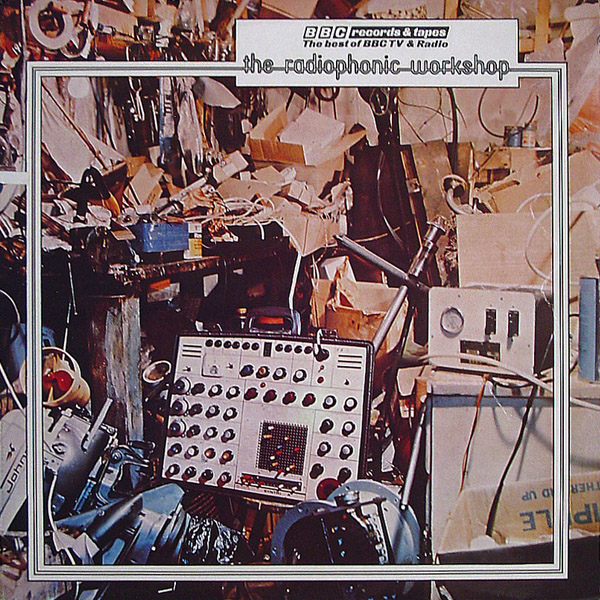
DM: [Examining the copy of the 1975 LP The Radiophonic Workshop I’ve just asked him to sign] Which one is this? […] Ah, yes. We come up against all sorts of people, you know. We went on [insert title of well-known ‘Blue Peter-for-adults’-style TV programme] to talk about the workshop. And [The Producer] says ‘Oh, it’s lovely to meet you, I was ever so interested in that record!’ [Indicates the photograph on the sleeve] ‘Is that the Radiophonic Workshop? I said no, that’s our boss’s shed, because he’s got an outboard motor there from his boat, [and] there’s a model yacht up there and an anchor there, that’s not the [workshop]! She really thought it was, she had no idea what we actually did there!
If I may say so, I think your track ‘Adagio’ from this album is one of my all-time favourite pieces of music.
My wife can’t stand in the same room as it. I took it home ‘cause I was so pleased with it. And she came out white as a sheet! She said ‘I actually hate it!’ She said ‘I would take that cassette out and cheerfully jump on it!’ I said ‘Why?!’ I think I’ve worked out that my wife, poor unfortunate; she hasn’t got the ability to suspend her belief. She would probably tolerate science fiction but she knows it could never happen. I said ‘well you’re approaching it from the wrong [angle]. Why can’t you… this could happen!’ And she says ‘But I know it couldn’t!’ It’s though her imagination can’t comprehend an open space or a space that she can’t see the limitations to.
What was your brief when you were creating Adagio?
There wasn’t any. This record, I don’t think contains anything [produced by commission]. [They] said ‘Oh, have a dabble and if we get enough we’ll put it together and put it out on a disc.’
That must have been quite unusual for the workshop?
Yeah. Actually, I tell a lie. Because this ‘Adagio’ I actually did compose for [pauses to remember]… well, no, I used it for a show that I was involved on called… What was it, Captain Zep or was it Duke Diamond? [NB It was Zep, although Mills worked on them both] Kids television about an academy for space cadets, a detective series. The students were shown a crime being committed and they had to deduce who did it. But because it took place in this big academy and the students are in an auditorium, before it started they wanted some ‘muzak’ to go over this auditorium [scene], so I did that. And they just played it over and over again in the auditorium and I got extra PRS because the students and the characters in the play could hear it and it was wonderful! Then I did a… I’m not sure if I did a similar piece… no, it’s not on here… called ‘Come and Go’* because what I did I did a bit of like Adagio and made a long length of it, turned it round the other way and joined it up [gestures handling tape] so it went like that and went away again! I just spent an afternoon meandering with a synthesiser and put some twinkles on it.
For me, personally, it’s one of the Workshop’s most haunting works.
Yes! It’s funny, a lot of record reviewers when they [wrote about] the workshop, the came out and said ‘the most surprising thing on this record is Dick Mills, we didn’t know he did music! Well I wouldn’t class that as music, that’s the trouble! It’s not written as music, it’s just… extemporised, I suppose.
You wouldn’t call it music, though?
Well, I would, you know, tonal-wise. Yes, rather than a sound effect. Or you could call it ”the music of the spheres” or whatever. You know, it’s just… [trails off, shrugs]
Your background was more in the creation of the sound effects, particularly for Doctor Who. And you also helped produce the iconic theme tune?
Oh, yeah! I did [the Doctor Who theme] with Delia and we stuck it all together. Actually, at last year’s fiftieth anniversary party at the Excel Centre, I did a presentation on how we put the signature tune together. I managed to get the components – three separate components – and I played them on the computer and I actually photographed the screen so that you could see the traces going along and then I put all the traces up and showed how they all went relative to each other. And then I described what happened when we [encountered] a bum note and couldn’t find it. We had to unwind all the tapes down the corridor and count the joins. That was the only way of [finding] it.
The Doctor Who theme is an enigma, if you like, to most people, because they can’t actually latch on to any known instrument that they think might have been used to make it because there wasn’t any musical instruments. It consists of three basic music lines, a bass track that goes all the way through then you‘ve got the melody that goes most of the way through, then the twiddle-y bits on the top and the whoosh noises that makes the graphics behind it. So Delia and I would have constructed those on thee separate tapes that had to be played together. No synthesisers, no multitrack, nothing. So the bass note was a twanged wire, which then had to be speeded up or slowed down to give you the right pitch, then then had to be cut together to the right length. Then everyone of those bass note phrases had a little grace note stuck ion the front which was an extra ‘whurrp’ from an oscillator. Then Delia did the melody ‘OOO-EE-OO’ with an oscillator she just waggled the knob until she got the phrasing correct; then she had to copy those how many times she wanted it and cut them all together. Then the white noise was whoosh-y noise, [we] played it backwards and looped it, speed-changed it, mixed it all together. Then we played the three tapes together… and there was a mistake!Now, nobody can watch three different reels of tape being played and spot where the mistake is, particularly as each of these tapes were full of splices. So what we had to do was to unroll these three rolls of tape, right down the corridor at Maida Vale, and walk along looking at the visual pattern of the splices. And when one of the splices was out of [the] visual pattern that’s got to be where the wrong note is.
As someone who makes music with tape, I do know how unpredictable it can be.
Yes! And you’ve only got to store it too long [for] the joints to dry out! But usually we didn’t have too much problem. Sometimes the backing on the tape was of a funny composition and sometimes the editing sticky[tape] was of a different make and it just wouldn’t stick on, but we didn’t have too much malfunctions, as they say. There was a trick that you’re supposed to wind a tape on inside out because if there [were] any loud passages in the tape it tended to print through magnetically to the next layer of tape on the spool. And if you wound it backwards or perhaps inside out, it would print after itself, so you wouldn’t get a pre-echo or a loud noise and so know what was coming! It was silly and nobody ever went through and tried to prove it!
And with that, he was ushered away to join the imminent panel discussion occurring in the main hall. What an absolute treat it was to spend some time with him. And as an added treat of my own, I’ve found some footage of the aforementioned children’s science fiction quiz show ‘Captain Zep’ on youtube and have included it below for your edification. Sadly, this slightly poor edit was the only clip of the programme I could find, but gratifyingly it does include the auditorium scene with an extract from ‘Adagio’ playing in the background, just as Dick described it. It’s interesting to note that, despite being quite a bit older, his music has aged far better in the ensuing decades than the ‘Captain Zep’ programme itself – It’s hard to believe that puffy yellow ‘space-clown’ uniforms, copious amounts of hair-gel and extended scenes pertaining to the distribution of badges to schoolchildren could ever be considered essential televisual ingredients, though respect is due to lead actor Paul Greenword for keeping straight-faced throughout:
For those of you hungry for more, a complete overview of Dick Mills’ credited and uncredited work would be far beyond my capabilities here, though any fans of classic Doctor Who will recognise much of his work – he was the principle ‘special sound’ creator for the series’ original run from 1972 onwards, the best part of two decades. The BBC Records Special I produced in 2012 for Jonny Trunk’s OST show is a good place to start, though I say so myself, featuring as it does a number of his original compositions, including several from the ‘Hi Tech FX’ LP, which should be considered an essential purchase for fans of the Doctor, sound effects and electronic music alike! And anyone who can offer me some information regarding the track ‘Come and Go’ that Dick mentions is encouraged to get in touch. I can’t find the slightest reference to it anywhere!
Finally, on a more whimsical note and as a bonus for you synth obsessives, here’s a rare chance to see the classic EMS Synthi that features on the ‘boss’s shed’ cover of The Radiophonic Workshop LP (and was one of the most important tools in the creation of sound effects for Doctor Who) in a far, far less illustrious setting – half-hidden in the background of a minisculely-budgeted CBBC atrocity from the 1980s that must count as one of the most genuinely disturbing pieces of television you’ll ever have to sit through. I’m quite sure I won’t be alone in stating that if I happened to be in possession of such classic hardware, I could think of 1000 better things to do than dangle nasty wobbling puppets all over it – typical BBC squandering of resources! That said, this clip remains my staple riposte to anyone who dares to tell me things aren’t as good as they used to be. And there’s bonus points if you survive long enough to catch a flash of Edd The Duck at the very end, no stranger himself to appalling pond-dwelling pop.
The sublime to the ridiculous writ large. I think I might need a bath now…
Thanks you for your email. It’s really good to hear that my work is reaching such a wide variety of places and I thank you for taking an interest. I have to confess, however, at being just a little confused as to your reasons for getting in touch.
If indeed you have visited my website (and let us assume that your writing to me regarding its content suggests that you have), you will have noticed that it’s primarily concerned with the subjects of Radiophonic broadcasting and experimental music, with particular emphasis on the activities of the tape-loop quartet Howlround (who, as I’m sure you’re aware, unveiled some brand new material EXCLUSIVELY onNTS Radio’sAlien Jams show last week and are playing their last gig for the forseeable future on May 7th at The Electric Dog Show, Power Lunches, Dalston). However, with the exception of occasional reference to the anti-social hours one is forced to keep while ploughing these particular furrows (including the long nocturnal sessions working on their highly-regarded 2012 LPThe Ghosts Of Bush), I think I’m correct in stating that my extensive online content has rarely if ever turned to the subject of purchasing beds. It has certainly never been my aim to send my readers to sleep, and while I have had my music branded ‘eerily soothing’ in the past; I’m not really sure it’s the kind of soundtrack a customer of an online Bed Store would find conducive to a restful night’s slumber.
I’ve had a look at the website of the company in question and was pleased to note that their products do indeed appear sturdy and reliable. In fact, it looks like a pretty classy operation all-round, which leads me to assume that they make considerably more money flogging Ottomans and Mid-sleepers than I make shifting my small back-catalogue of short-run, experimental tape-loop music. Therefore I can’t help thinking that any organisation expecting me to endorse their already very successful business on my own personal web-page while palming me off with a measly twenty quid is frankly one open-coil spring short of a Star-Ultimate Maestro Mattress. Sorry, but I just don’t get out of bed for that sort of money if you’ll forgive my labouring a point.
In short, while I thank you for your offer, Slap-Up Media are going to have to consider slapping up quite a bit more before I start going to bed with any large corporations. At least buy me dinner and some flowers first. A ‘slap-up dinner’, naturally…
Very best wishes,
Robin The Fog
PS You’ll notice I’m typing these words at four o’clock in the morning, which should give you a pretty good idea of just how qualified I am to be giving anyone advice on the subject of going to bed.
For those of you who somehow found last Sunday afternoon’s weather conducive to doing anything other than staying in and listening to the radio (and found themselves lacking a smartphone or internet-ready umbrella), I’m very pleased to inform you that the latest edition of the Alien Jams show on NTS Radio featuring SPECIAL GUESTS HOWLROUND!!! (my caps) is now online for your streaming pleasure. We took the opportunity to road-test some brand new material from our as-yet-completely-unfinished next release, and indeed a sizeable chunk of airtime was given over to brand new works fresh off the spools, plus at least one new piece that will probably never be heard or referenced ever again. It’s something of a departure from our previous LPs, but we think it fits into the Howlround niche quite nicely. Dig in, won’t you?:
There’s other news this month, both very good and slightly bad. The very good news is that we’re excited to be playing The Electric Dog show at Power Lunches in Dalston on May 7th. Brought to you by Soft Bodies Records, we’re playing alongside Quimper and Gyratory System and it looks set to be yet another killer line-up to be slotted into! Further details here and there’s also a Facebook Event Page as there so often is with these modern events. The slightly bad news is that this will be your last chance to catch Howlround live for the FORESEEABLE FUTURE!
But before your throw up your hands and commence wailing and gnashing, I must reassure you that this is by no means the end of the our tape loop adventures, though given that I’ve just been boasting about playing exclusive new material from a forthcoming release, you may already have picked up on that. Aside from avoiding very real damage being caused to our quartet of Revoxes every time they leave my studio (not to mention our spines!), we’ve decided that now is a good time to hunker down and concentrate on building a solid repertoire of tape music while they still just about work. That way, when each machine is assumed into Revox Heaven (and the day cannot be that far off), we’ll have lots and lots of material in reserve that we can release posthumously in a steady drip-feed, while raking in the cash. A bit like Tupac. Oh, and Chris is moving to Dubai. Did I mention that?
So, a bit of a change on the horizon. I must admit I shall greatly miss jamming with my indispensable partner-in-tape who has bought so much to the project over the past year; but work will continue thanks to the wonders of THE INTERNET and we’re both very excited about where things are going (quite literally, in Chris’s case). I hope that after a listen to the new material on the Alien Jams show you’ll be just a little excited too. Just a little…
Continuing with my interviews from the alumni of the BBC Radiophonic Workshop, we move on to genius composer Roger Limb. Part of what I suppose we could call the department’s ‘second wave’, he joined the workshop at the dawn of it’s synthesiser era in 1973 and worked as one of its principal producers and composers for over two decades, creating a huge body of signature tunes for television and radio drama that will almost certainly be familiar to anyone growing up in the UK over the past thirty years. Perhaps best known for his substantial contributions to Doctor Who during the eighties, he also recorded and produced many of the songs for the cult BBC Schools programme Look And Read, including the famous ‘Magic E’ song that became the subject of much rather tiresome postmodern chuckling in subsequent years:
A respected pop and jazz musician outside of the workshop, Limb has now rejoined his friends and former colleagues as part of a revamped Radiophonic Workshop band and will be touring the festival circuit with them over the summer. This interview took place during a rather brief interval in a long day of discussions and performances at Chichester University. Despite being pushed for time, however, Roger’s additional years as a voiceover artist and continuity announcer for the BBC meant that he had no trouble putting his points across quickly and succinctly!
RL: I think the Radiophonic Workshop has a sort of legacy, [because] even though it closed down 15 years ago, there’s a whole generation of people for whom the phrase ‘Radiophonic Workshop’ has some sort of mystical quality. When they were kids, perhaps they saw the name on the screen. Or they heard the back announcement on radio [and thought] “… Radiophonic Workshop – what does it mean, who are these radiophonic workmen, what do they do , where do these strange uncanny sounds and strange music come from, what is going on there?” So I think a lot of people remember that rather mysterious atmosphere, and [had] questions about it that were never properly answered, questions that are still hanging in the air today.
Can you tell us something about the equipment and techniques used by the workshop?
When the Radiophonic Workshop first began producing music there was a lot of very strange and rudimentary techniques [involved]. The whole idea of tape manipulation – you get a piece of sound on a tape and you can do strange things to it: play it slower, play it backwards, damage the tape slightly, put unearthly echo on it… And [so] a lot of the early radiophonic music that came from the workshop was tape that had been manipulated. Later on there was quite a big change in the early 1970s when synthesisers became more and more used and the old tape cutting techniques went out of fashion. So for the last thirty years the signature sound of the workshop has been the synthesiser. But that doesn’t mean to say it’s [become] limited because the whole world of synthesisers, the whole world of sequencing and sampling has meant an enormous change and development in the techniques available for people who were doing electronic, radiophonic music.
With that in mind, I’m wondering what your thoughts are on modern electronic music, about how your influence has permeated down to the current generation?
I think there’s no doubt at all that the radiophonic workshop cast a very long shadow. Techniques have changed drastically in the last ten, twenty years and now it’s possible for people at home with home studios, even on their cell-phones, to create and play radiophonic music through wonderful speaker arrays and things such as that. There’s a huge market and a huge output of Radiophonic electronic music now. I don’t know how on earth [to keep track of it], it’s like the old question of loads and loads of people talking but nobody listening! I listen to as much of it as I can and from time to time I hear something that’s quite arresting, something that obviously a person ha put a lot of thought and ingenuity into. And that’s really quite interesting, but the problem is there is so much to listen to that it’s quite often just a happy chance if you happen to hear something [significant]. But I keep listening!
As a member of twenty years standing, you must have seen quite a lot of change at the workshop?
When I arrived there were about five or six studios in which each individual member of the workshop would set up their own little studio according to the way they wanted things, whether it was tape machines, synthesisers, or mixing desks. As time went on the techniques became more and more advanced and we had a little more money to spend on for example multi-track tape machines. And then another big change happened in the 1980s and that was the arrival of sequencing programmes on computers. Quite rudimentary to start with but developing in such a way that it was a joy to use, particularly for incidental music for drama when you could measure the action that was given to you on the tape or the film and express it exactly onto a sequence on a computer and [then] write the music around it. It was a wonderful tool to use.
Talking to you and to Paddy Kingsland earlier, the impression that I get is that there is a lot of excitement in the current line-up about modern developments in music technology, rather than simply using the tried and tested methods you would have used in the workshop at the time.
I think there is, but [out of all of us] I’m probably the most of an old curmudgeon, because quite apart form doing these gigs with the RW -we’re performing live quite regularly- I go out and do a lot of live jazz gigs, playing piano or double bass, playing conventional music and trying to do it in an unconventional or original sort of way. So when I hear about these [modern] techniques they talk about, recording and finding good samples from the recordings they do with the people who want to come and work with us, I was a little bit wary at first , I thought ‘hmm, this doesn’t sound like much fun to me’. But I’ve had a couple of goes at it and I must say that it’s growing on me and I’m getting more and more involved in using the techniques that have been prescribed. And I think a lot of positive stuff is coming out of it.
And finally, can you tell us anything about the new album?
There is an album due out and it’s going to be out in a matter of months, perhaps. We’re putting some final touches to it next month, in May. It will be called ‘Electricity’, rather appropriately. And there will be a lot of new stuff on it, but perhaps we will revisit one or two old tracks as well.
Many thanks to Roger Limb, and you can catch the reformed Radiophonic Workshop on tour over the coming months with further details to follow. In the meantime my Radiophonic Workshop reunion package for BBC World Service and Paddy Kingsland interview are both still available on this website for your perusal. Dick Mills will be up next, but for now let’s give the last word to Roger Limb, and another collaboration with the great Derrick Griffiths that will not only be instantly familiar to many generations of former children (indeed I can recall my entire primary school class singing it), but is quite likely to stick in your head all day. Stick. Stick-ing. Build yourself a word!
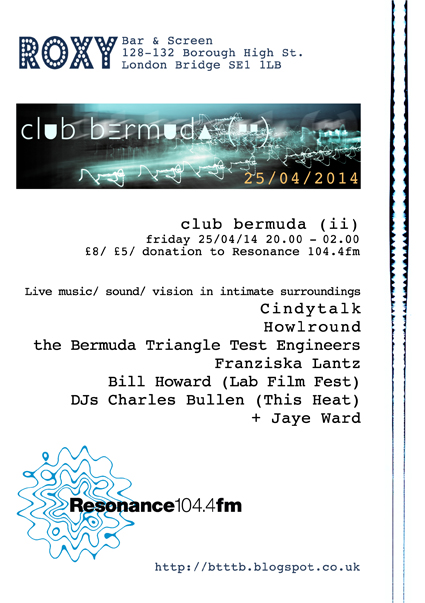
Very excited about this weekend, when Howlround will be spooling up for a live performance at the Roxy Bar and Screen as part of Club Bermuda ii. And a fantastic line-up too, including Cindytalk, Charles Bullen of This Heat and Franziska Lantz, who you might remember from our collaboration for Radio 3’s Late Junction a few months back. There’s also a Facebook Events Page for those of a social media disposition. All proceeds go to help keep Resonance FM on air and if the previous event is anything to go by, it promises to be a memorable evening for everyone concerned. Hope to see you there.
If that wasn’t enough, we’ll be guests of Alien Jams on NTS Radio at 5pm this Sunday, where we’ll be unveiling some brand new Howlround works exclusively on the show. These are fresh off the spools, less than a week old and will hopefully feature in some shape or form on a new release in the summer. It’s a bit of a departure from our currently released material, but I certainly hope you’ll find them sonically intriguing and am looking forward to giving them an airing!
Speaking of exclusive tracks, Howlround have contributed a previously unreleased short work ‘Wing to Wing’ to a CD sampler put together by Running On Air Music, one of the brains behind last weekend’s brilliant Archaeology event in Winchester. We had a fabulous time enjoying performances by Kemper Norton, Olan Mill, Stephen C. Stamper and Clive Henry and put on one of our finest turns yet, though I say so myself. Each of the aforementioned has also donated an exclusive work, thus making it pretty essential listening, quite frankly. Certainly the only way you’ll get to hear ‘Wing to Wing’ until our huge career retrospective is released fifty years from now. Available here as a very limited CD and download if you can’t wait until then.
As you can see, this 100th post is a rather busy and hurried affair, with lots to impart, which just goes to demonstrate what a busy couple of weeks it’s been. Remember that my BBC World Service feature on The Radiophonic Workshop Revivial and interview with Paddy Kingsland are both still available on this site for your viewing pleasure, with Dick Mills, Roger Limb and Mark Ayres to follow. But that’s probably enough to be getting on with for now. Hope to be seeing some of you over the weekend and I’ll leave you with this live mix I made for my good friends at NO-FM last year during my residency in Serbia, which has finally found it’s way onto Mixcloud. You should definitely check these guys out…
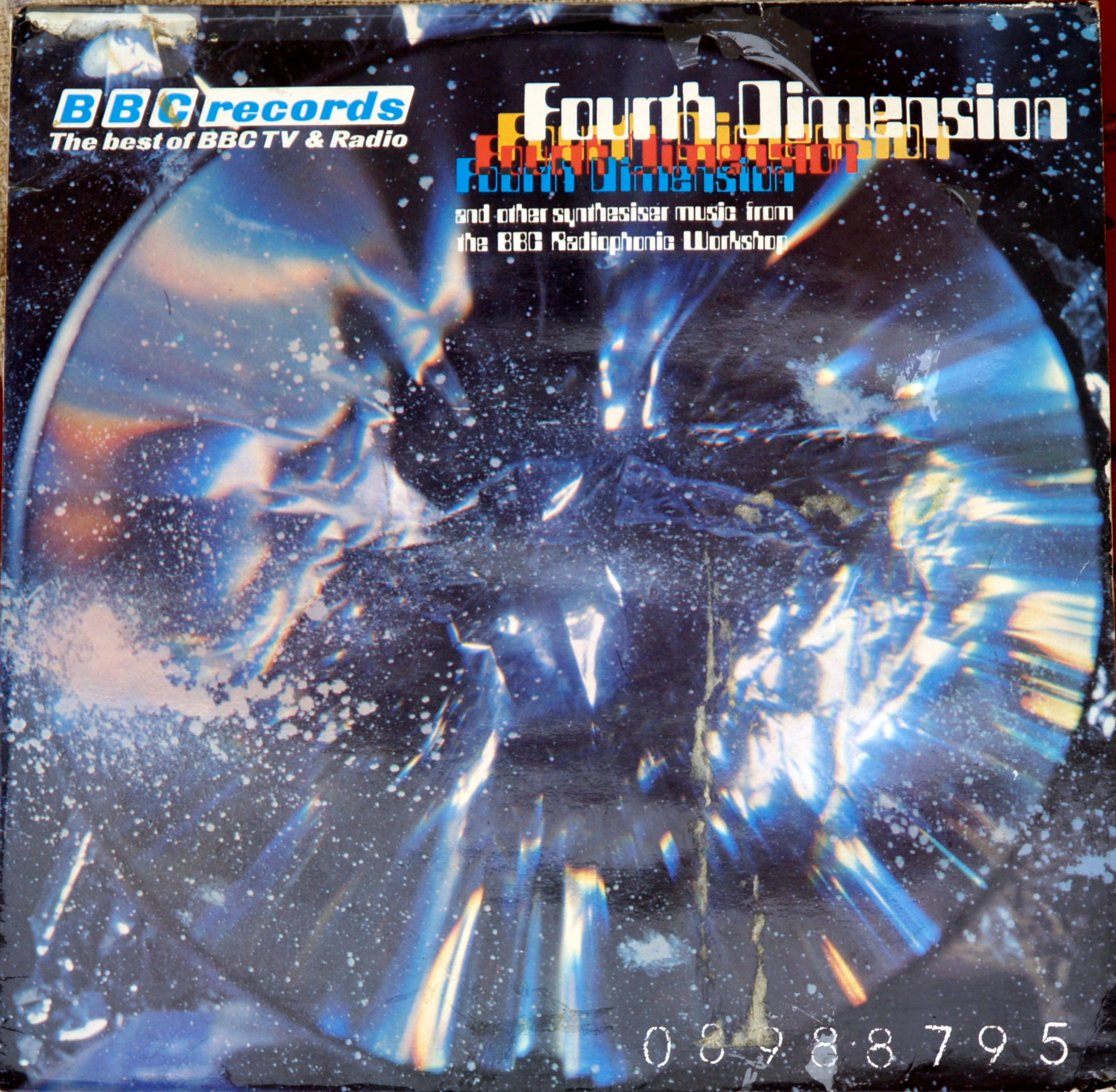
As promised, following last week’s report for BBC World Service, here is the first of four interviews with the veterans of the Radiophonic Workshop, the ‘Godfathers of British Electronic Music’, now reformed and touring their collection of vintage analogue equipment and classic radiophonic works to rapturous reception. They’ll be featured in the order I interviewed them two weeks ago at the University of Chichester, so we’re starting with synthesiser legend Paddy Kingsland; the man who definitely put the ‘funk’ into radiophonics. Best known for The Fourth Dimension LP (essentially a Kingsland solo album), he has a string of classic BBC themes to his name, as well as providing incidental music for such classics as Hitchhiker’s Guide to the Galaxy, Dr. Who and many more. Paddy has also recorded solo albums, made library music and jingles for KPM and worked alongside composers such as Michael Nyman. His signature sound is melodic synthesiser workouts with a strong rhythmic back-bone and the track ‘Vespucci’ is a highlight of their revived set-list. This interview, slightly truncated here, took place in the artist’s green room at Chichester University; with moderate interruptions from the air conditioning…
PK:I worked at the Radiophonic Workshop for the BBC between 1970 and 1981, which is quite a long time ago now. Of course I’ve done quite a lot of other things since then, but more recently I was approached by some other friends who worked at the BBC Radiophonic Workshop and was asked if I‘d be interested in doing some gigs with them – some live events. And so that’s what we’ve been doing. We started, actually, getting on for five years ago at The Roundhouse with a live show which went down very well. There were roughly two thousand people who went to that and they seemed to enjoy it. And we thought, ‘well, is that the two thousand people who might be interested in a show of that sort? Because if it is then that’s it, we’ve done it’! And so we didn’t do very much apart from make enquiries until quite recently, in fact a year ago, when we did a festival at Port Merion – Festival No. 6. It seemed to go down pretty well there, so we’re now doing a series of festivals this year.
We were asked to come [to Chichester University] because they have an event which is dedicated to the Radiophonic Workshop, which of course hasn’t been running for several years now. And so there’s all sorts of interest in that, so it’s a big honour to be asked to be involved. We’re doing a number of chats with the various people like Roger Limb, Mark Ayres, Peter Howell, also Dick Mills and myself. We’re doing some chats with people who are interested and asking questions of us and then after that we’re going to do our show which we do at festivals and so on. So I hope people enjoy that performance.
RTF: I’d heard a rumour there’s a new Radiophonic Workshop album?
Yes, there’s a new album we’re making as well alongside all of this, we’ve been working with one or two other people who are interested and quite eminent some of them, in electronic music and pop music. We’re trying to do some new stuff rather than just producing hits from the past. We’re not sure when it’s going to be finished, but we’re working quite hard on it. We have a marvellous addition to the group who is Kieron Pepper, a percussionist, a drummer and also a multi-instrumentalist – and a lot younger than we are with far more energy! He’s joining us on this and we’re preparing some tracks now and some of them we’ll be using in our performance later on tonight. We’re working with a few different people – I’m not going to say who yet, because we don’t know how it’s all going. But people from the electronic music world, the contemporary music [scene] and commercial music as well. And that’s really exciting, working with those people. So we hope to have some material to release later on in the year.
Will you be using some of the old radiophonic equipment?
We always have that on hand. One of the things about what we do is that we’re interested in trying to make our own sounds rather than having sounds that are already made for us. So quite a lot of the things we do are made by bashing things or by putting things through a treatment rather than just pushing a preset on a synth. Having said that a lot of the live stuff we do have to use presets from time to time – [though] we have actually made the sounds up ourselves in those cases, we try to make sure they’re sounds we’ve made ourselves.
It’s so much easier nowadays to make electronic music – using an app on a smartphone for instance. How does the Workshop define itself in this modern era when it’s much easier for everyone to dabble? How do you stand out?
It’s a good thing. I think the answer is that it’s always about the music. A lot of these methods of making stuff on a smart phone or an iPad – and I’ve got some lovely apps which you can play with and they’re absolutely beautiful. You can make lovely sounds on them. But I think if you look back at some of the great things that Delia for instance – and everyone’s got one or two things – [it is] quite distinctively them making a piece of music. It doesn’t really matter what they made it on, it was an expression of themselves musically. And I think that’s what we try to do. Maybe somebody will say ‘oh no, that’s not very good, the thing that that guy has just done in his bedroom is much better’. That’s fine, that’s the way things are with music generally anyway. But I think that’s the [correct] approach – to think about the music first and how you make it afterwards.
That’s one of the things I loved about the workshop, the emphasis wasn’t on how the music was made, it simply had to be made, it had a function to fulfil.
It’s all mixed up together isn’t it? It’s all part of it. If you just make a sound with the latest box, that’s fine. But really the luck in it for us was that we had, unlike a lot of other experimenters at the time, who were doing music to please themselves or to make an album at some later date; we had a deadline and work to do. It was a play or a documentary or something of that kind. Never a concert! But it was something which we had to fit in with. If you’re doing incidental music for a play it has to work for that play. The director’s not interested in your doing some outlandish thing that doesn’t [fit] the work, so we had a set of really good guidelines before we started. And that cuts everything down so you can actually relax a bit more and make something that’s suitable. And you can blame it on the project if it’s not something you like!
So you were working to a strict brief, it wasn’t a research body unlike the experimental electronic studio of the times. I had always thought that the members of the workshop would perhaps consider that limiting and yet what you’re saying is that you actually found that very liberating?
Well, it is because it makes it much easier for you. When you’re doing music to order, if somebody says ‘I’ve got this pay, it’s very, very sinister, uneasy atmosphere, something awful is just about to happen’; you can almost hear the music before you start. If somebody says ‘I’ve got this wonderful project, we’re asking five musicians to make any kind of music they like, you can do anything you want, you can hire an orchestra you can do it on a banjo, you can do it on synthesisers, electronics, lampshades, anything you like and we’re going to pay you for it’; what usually happens is you just kind of go into a daze and you find yourself unable to produce anything. Whereas if somebody says ‘I need this and I need it by Thursday, that’s something that allows you to work and it makes you work.
Do you have of your own work a particular favourite?
From the electronic era, I must say I do like some of the things from the Hitchhiker’s Guide to the Galaxy, some of the Dr Who shows I quite like now, and one or two of my theme tunes were quite fun: ‘Rugby Special’ and a few things like that, which I’m still quite fond of. But then when you listen to those things you remember where you were at the time and how it was and all of those things. Like listening to any piece of music, it brings back the memories surrounding where you were when you did it.
I remember doing a documentary called ‘In Tune When I Bought It’ and it was a documentary about guitars and guitar players, that sort of thing and it featured Hank Marvin and Pete Townsend and various people like that. And it was lovely to read a review where the reviewer – I think it was Gillian Reynolds – said ‘it brought back teatime on Saturday’. And it was lovely because that was the real intention behind making the show. It’s nice if you can put something in which is very difficult to describe and fairly abstract, but it comes across. That’s something that’s lovely about music, you can put things into music which say it better than words.
Any thoughts on what modern generation of artists have done with what you and the Radiophonic Workshop began, or at least bought to a much wider audience?
I hear things on the TV all the time, which is marvellous. Electronic music [that] I know John Baker and Delia and people would have really admired, because it’s so beautifully done and often very sparing and very underplayed and evokes feelings, particularly in some of the dramas now. And also the appreciation of just pure electronic sound is much more now by all sorts of people. Because I think generally people are less prejudiced now in all sorts of areas. They don’t restrict themselves in the way that I suppose we used to in our day, you know, ‘I don’t like that sort of music, I only like this’, or ‘I don’t like jazz or anything like that’ People are much more broad-minded now about al sorts of things, including music.
So you’ve been impressed by what the modern generation have been making?
Definitely, yes. The modern stuff definitely impresses me and it impresses me more since I’ve been working with people like Kieron Pepper, who’s our percussionist and a highly accomplished musician. And seeing how he approaches things and how it works – it’s just amazing how that generation are able to do it equally as well as we did. But they’re doing it at home, maybe with less facilities than we had by comparison.
Thanks to Paddy Kingsland for being such interesting and affable company and stay tuned for further interviews with Roger Limb, Dick Mills and Mark Ayres that I’ll be posting up over the next week or so. In the meantime, why not check out the ‘BBC Records Special‘ I made for Jonny Trunk’s OST Show back in 2012? Plenty of rare Radiophonic cues to be found amongst all the whistles and bells…
Presented for your approval, my latest broadcast work produced for the BBC World Service regarding the subject of Chichester University’s one-day symposium on the Radiophonic Workshop, the Godfathers (and Godmothers) of British electronic music, a quintet of whom have reformed and are touring their classic works to a whole new generation of admirers. With the prospect of a summer spent gingerly moving vintage analogue hardware round a succession of festivals now confirmed, Chichester University had organised a day of talks and discussions about the Workshop’s rich history and enduring legacy; followed by an evening’s live performance of some of their classic Radiophonic works.
And what classics they are. The impact of the Workshop on the history of electronic music simply cannot be understated, and its influence spreads throughout all strands of British culture, from Quatermass and the Pitt to Captain Ganja and the Space Patrol. Yet despite it’s long and distinguished career supplying four decades-worth of radio and TV programmes with sound effects, theme tunes and incidental music (plus getting sampled by rare and bonkers British reggae albums), there was never a moment of doubt as to how the day’s audience and invited experts – musicians, DJs, producers and sci-fi nerds – came first to hear of the workshop and, frequently, of electronic music in general. It was, of course, Doctor Who and the strange, enthralling and decidedly avant-garde sounds that it introduced to generations of children at Saturday tea-time.
Radiophonic Royalty – Dick Mills, Roger Limb and Paddy Kingsland. Photo by Nick Joy
Full disclosure – Despite appearing in Iain Wilson’s excellent documentary That Dr. Who Sound! for Australia’s ABC Radio last year, I’m not actually much of an authority on the good Doctor. You can tell this because I have a nagging fondness for the Sylvester McCoy era, even if it does mostly seem to consist Bonnie Langford screaming her way round a succession of interstellar leisure centres. But in both it’s iconic theme tune (and there’s a good argument for the case that it’s the most famous television ‘sig’ of all time) and the incidental music and sound effects; the influence this programme alone has had on the past half-century of music-making is so mind-boggling it makes my hair stand on end. Particularly those hairs on the back of my neck that still tingle every single time I hear the TARDIS engines roaring into life. The original brief for this sound effect, we’re told, was ‘the very fabric of time and space being torn apart’. The solution was Brian Hodgson’s Mother’s front door key scraped along the wire of a broken-down piano. You will doubtless have heard this story many times already, yet somehow the knowledge of such prosaic origins does absolutely nothing to diminish its magic. Bless you, Mother Hodgson…
I’m not going to linger too much on a review of the day, fellow Radiophoniphile Nick Joy has written an excellent account for Scifibulletin.com, which manages to say pretty much everything I would have done, only better (he also let me steal a number of his photos). For my part, I was most privileged to interview Paddy Kingsland, Roger Limb, Dick Mills and Mark Ayres for the World Service report (although sadly the rigours of the day’s programme of discussions, lectures and the endless sound-checking of delicate analogue equipment left no time to fit in the great Peter Howell and complete the set). However, each of these most interesting and amiable gentlemen gave me so much fascinating material that I’ve decided to publish the full transcripts EXCLUSIVELY on these pages over the next couple of weeks. Forgive me for boasting, but THAT is what I call a coup! Besides, if the legendary Dick Mills starts telling you about his wife’s stated desire to stamp on one of his newly-completed works, you’re hardly going to leave it on the cutting room floor, are you?
Sadly I can’t bring you any recordings of the performance itself, due to copyright issues being strictly enforced. But I can tell you it was a beautifully nuanced audio-visual tour of the Workshop’s past, present and future, with classic tracks rubbing shoulders with newer works in progress. Particularly worthy of note was their cover version of Joe Meek’s classic ‘Telstar’, Delia Derbyshire’s ‘Zizwih Zizwih OO-OO-OO-OO’ transformed into pounding techno, and Peter Howell leading a performance of vocoder classic ‘Greenwich Chimes’ while silhouetted against archive footage of himself recording the same lines decades earlier. A curiously moving spectacle.
Paddy Kingsland, Peter Howell, the young Peter Howell and Mark Ayres
Both in person and as part of the various panel discussions that made up the course of the day, the one thing that struck me about these veterans of the Workshop was their keen-ness to create new music rather than simply rest on their considerable laurels; and of how excited they were by the latest developments in technology. All of this bodes very well for their forthcoming album of new and original material, provisionally titled Electricity, several tracks from which were intermingled with the crowd-pleasing classics in the evening’s performance. But, of course, it goes without saying, there was only ever going to be one piece of music that they could end with. And as the quintet romped through the home stretch of Ron Grainer and Delia Derbyshire’s greatest work, backed by the thundering percussion of latest recruit Kieron Pepper, I’m sure I wasn’t the only person to feel those hairs on the back of my neck rising up once again. Certainly not if the standing ovation they received was anything to judge by.
I’m really looking forward to sharing these interview with you all in full. If you haven’t already done so, you might like to consider subscribing to this blog to avoid missing anything – the button is on the right of this page. You might have to bear with me for a few days, however, Howlround are playing Winchester this Saturday and we’re completely unprepared as usual. All will be revealed. In the meantime, thanks to Dr. Adam Locks, James Haigh and the University of Chichester for organising such an amazing event and to Mark Ayres, Peter Howell, Dick Mills, Paddy Kingsland and Roger Limb for being each so affable and so very entertaining. Oh, and to Nick Joy for the photographs. I must also thank Paddy, Roger and Dick for for defacing one of my most treasured possessions!:
Sorry about this picture – I was too excited to wait for better light!
It’s not every day you meet your heroes, you know… 🙂
I’ve decided you’ve waited long enough. In truth it’s only been a week, and not a particularly slow one, but here, in response to overwhelming demand, is part 2 of my DJ set in support of The Band Of Holy Joy in Charterhouse last month. It’s another jolly fine selection, though I say so myself and I simply could not keep it suppressed a moment longer:
You are so welcome. No, no, please, get stuck in. Notice my amusing juxtaposition of Yma Sumac and Lee ‘Scratch Perry’? I thought you might…
Anyway, you join me today on my bedroom floor where I am currently convalescing. This was the dramatic conclusion of a day Chris and I spent lugging the Howlround soundsystem to and from a secret performance for the students of Havering College as part of their ‘Sonic Futures’ event. The theme this year was ‘dereliction’ – who else would they call, quite frankly?! And after a couple of hours on these floorboards, I’ve started to gain real, first-hand experience of what feeling ‘derelict’ is like.
Happier times: Howlround in their former robust health (i.e. last Thursday)
We were made most welcome by the staff and students of the college who took a real interest in our work (particularly our demonstration of how much fun you can have with a loop of tape and a staffroom radiator) and were in turn most impressed by the student’s work that was on display. Plus we were rewarded for our efforts with a slap-up thai meal and – even more excitingly – two new additions to our army of PR99 tape machines. Not a bad day’s work at all! But every silver lining must of course have a cloud, which accounts for the fresh scar on Chris’s right hand, the fresh scar on the wall of my flat where I inadvertently threw a tape machine; and the apparent lesions to my spine which asserted themselves the following morning while bending over to pick up a sock. Such are the risks of a life spent hulking great big reel-to-reel machines around, risks that have now afforded me several hours stiffly regarding my bedroom ceiling from a dramatic new perspective. The moral of the story? Leave your socks where they fall…
I’m completely confident, however, that by the coming of our next gig at Archaeologies, all will be back to full working order (with the exception of the wall – I’ll just blu-tak something over it and hope the landlord doesn’t notice). Those of you based in the vicinity of Winchester are warmly requested to The Railway, 3 St. Pauls Hill, where we’ll be playing alongside Stephen C. Stamper, Clive Henry, Olan Mill and our old friend Kemper Norton, who’s recent album Carn for Exotic Pylon is a thing of beauty indeed. Tickets and further information here.
For those of you who never leave London, not even for a moment, I’m pleased to add that we shall be playing Club Bermuda at The Roxy Bar and Screen in Borough on April 25th and The Electric Dog Show, Power Lunches, Dalston on May 7th. Further details for both of these exciting performances to follow. I also implore you to read this extremely flattering review of Howlround‘s trio of official releases on the blog of ace music magazine/radio show The Sound Projector! Made our chests puff out with pride, so it did!
Photo by Andy Popperwell, featuring me pulling my EXPLAINING FACE. Troublingly, it’s the most flattering of the bunch. For bonus fun, see if you can spot the fellow oldskool junglist. Answers on a postcard!
In conclusion, special thanks this week must go to Andy, Alex, Dave and the students of Havering College (there’s some more photos of the event here if you fancy a gander). We’re very grateful for your interest and the new additions to the Howlround arsenal. I’m quite sure those new Revoxes will work a treat once we’ve scrubbed a decade’s worth of Andy’s garage off them!
I’ll leave you with a sneak preview of something new that may or may not be part of a much longer composition that may or may not be coming out on a brand new album at some point in the not-too-distant future. Such a tease:
Thanks very much to Johny Brown and The Band Of Holy Joy for inviting me to DJ for them at last weekend’s Resonance FM benefit gig. And thanks also to everyone who packed out The Charterhouse and helped raise money for a very good cause. Fresh off the back of a successful UK tour promoting new album ‘Easy Listening’, our heroes tore through their set with tight and well-drilled vigour; while my own efforts on the turntables attempted to be a sort of cerebral yin to their tense and gritty yang. That was quite possibly the single most pretentious sentence I’ve ever written, but I hope you’ll forgive me after hearing the first part of my set; presented here for your approval and delectation:
If I may be so bold, even by my own exacting standards this is rather groovy, including as it does, tracks from Belbury Poly & Spacedog, Sculpture and Resource Centre – my three favourite releases of the last few months. I really was very lucky to have such a supportive crowd, as well, considering I was playing records at least several shades stranger and less bouncy than your standard Saturday night Farringdon faire (particularly when you take nearby behemoth leisure dungeon Fabric into account). Besides, whatever your thoughts on the musical content of the above, surely you would at least concur that it was a decidedly more crafted and personal affair than the dreadful funky house Spotify playlist that followed it.
New album out now on Exotic Pylon
Despite some interesting conversations with members of the crowd about the records I was playing, I’d like to dedicate this mix to the young upstart who accosted me in the booth (sounds painful, doesn’t it?) and demanded to know ‘what kind of stuff’ I played. This is usually acceptable, but he had already been standing and watching me play that very same ‘stuff’ for a good solid hour by this juncture and one would really assume that enough time to grant him reasonable insight. He also wanted to have a look through my record box in order to ‘thumb my stash’, quite forgetting the unwritten law that the contents of a DJ’s record box are as secret as those of a lady’s handbag. And like all handbags, it’s entirely the owner’s discretion as to which of those secrets get pulled out and bandied about for the entertainment of the masses.
One day I shall probably self-publish an amusing memoir of all these things that have been demanded of me during my DJ sets. Last night’s interloper might just find himself featured alongside a query from the previous week, where a slightly tipsy lady demanded to know whether I could play anything ‘happier’. She was struggling to make this demand heard over the copy of Prince Buster singing ‘Enjoy Yourself’ that I was spinning at the time. I’m not sure if a record happier than Prince Buster singing ‘Enjoy Yourself’ could physically exist. Or, if it did, that I could ever agree with her suggestion that ‘Whitney’ would be the person to have made it.
Anyway, never mind all that, go and get yourself a copy of the Easy Listening at the Exotic Pylon shop. And some Belbury Poly & Spacedog and Resource Centrewhile you’re at it (thatSculpture record is already going for silly money on Discogs). In the meantime there’s a second part to this mix that I shall doubtless bombard you with at some point, perhaps during a slow week. I might even allow you, dear reader, the privilege of a dig around my record bag. Just ask nicely and wipe your feet first…

 A rather hurried post today, starting with an extract from Howlround‘s final gig (for the time being) at The Electric Dog Show, Power Lunches from earlier this month. It’s a ‘greatest loops’ set of sorts, so you may hear a few of our favourites alongside some brand new material, of which we now have rather a lot. We really do need to start knocking it all together into that album we’re supposed to be getting on with:
 In other news, a most flattering post regarding Howlround’s debut album The Ghosts Of Bush (as well as a few other bits and pieces from the Foggy Archive) appeared this week on the excellent A Year In The Country website. Filed under ‘Trails and Influences / Other Pathways’, it’s the latest of the blog’s extensive investigations into ‘the underlying unsettledness to the English bucolic countryside dream’, and proves as immersive and well-researched as ever. This is amply proved by the fact that they dug out this home-made press release I’d forgotten ever making:
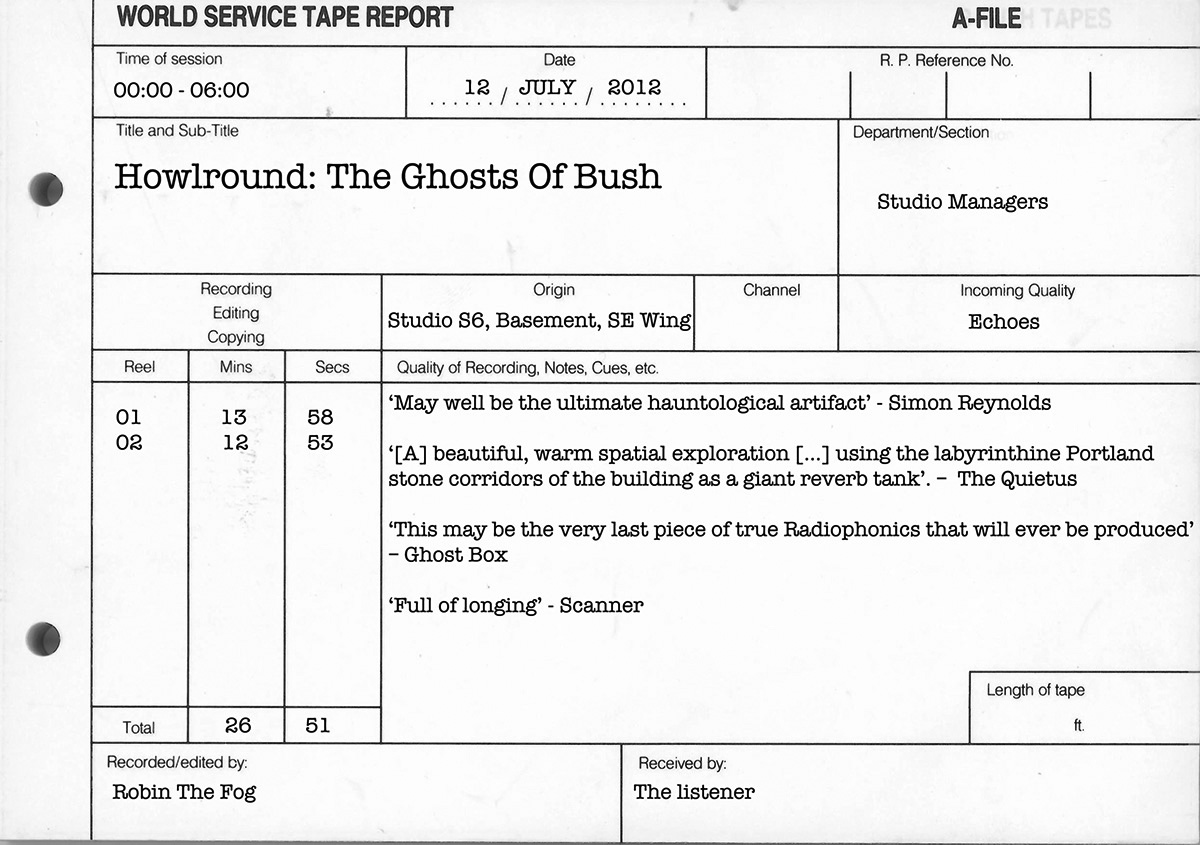 And lastly, to pile glory upon glory, ace music curators and Boomkat offshoot 14 Tracks have included ‘неизвежбан‘ from Howlround’s second album Secret Songs Of Savamala in their recent selection ‘Psychoacoustic Geography‘. It’s the second time I’ve been featured on one of their regular download compilations, each one centred around a specific theme; and this latest selection also features work by Ingram Marshall, Moondog, David Toop, Janek Schaefer and Anne Guthrie amongst many more! Very proud to be in such company, particularly as the reissue of ‘Fog Tropes’ on Arc Light Editions is, entirely predictably, my favourite reissue of the year to date and one of my favourite releases full stop. And so, as Howlround prepares to head back underground to concentrate on finishing albums and shunning the spotlight (and as Chris prepares to head to Dubai – thus making the project a truly global concern), we appear to be experiencing one last flurry of welcome publicity. Hopefully this will keep our enormous fan-base happy long enough for us to get our act together and finish the three album’s worth of material we currently owe various people. Best foot forward, then.





 Speaking of exclusive tracks, Howlround have contributed a previously unreleased short work ‘Wing to Wing’ to a CD sampler put together by